Demystifying Post-Acne Scars and Dermal Architecture Battling active acne breakouts is frustrating enough, but dealing with the permanent textural scarring left in their wake can feel deeply discouraging. Post-acne scars aren't just surface discoloration; they are structural changes in the deep dermal matrix caused by intense inflammatory damage. When an acne cyst or severe pustule ruptures deep inside a pore, it destroys localized collagen fibers and surrounding support tissue. As the immune system rushes in to repair the wound, it often deposits replacement collagen unevenly. Depending on whether the body produces too little tissue or forms rigid fibrotic bands, different types of indented, atrophic scars form across the face. Understanding the physiological differences between rolling and boxcar scars is the critical first step in choosing the right corrective treatment. Deconstructing Rolling Scars: The Invisible Tethering Effect Rolling scars get their name from the wave-like, undulating appearance they create across the cheeks and temples. Unlike sharp, clearly defined scars, rolling scars make the skin surface look gently dimpled, uneven, or shadowed, especially under harsh overhead lighting. The defining characteristic of rolling scars lies beneath the surface as fibrous anchoring bands. During the chaotic healing of an inflammatory acne lesion, tough bands of fibrotic scar tissue form between the upper dermis and the underlying subcutaneous fascia. These microscopic tethering bands contract over time, physically pulling the skin surface downward. To effectively smooth a rolling scar, treatment must focus on breaking these deep fibrous tethers while rebuilding cushiony structural collagen beneath the depression. Understanding Boxcar Scars: Sharp Edges and Tissue Loss Unlike rolling scars, boxcar scars appear as sharp, well-defined depressions with crisp vertical edges, resembling chickenpox scars or small crater-like indents. They occur when an acute inflammatory lesion destroys a localized volume of dermal tissue, leaving a void where normal collagen scaffold once existed. Boxcar scars are categorized by their depth: shallow boxcar scars extend less than 0.5 millimeters into the skin, whereas deep boxcar scars reach deeper dermal layers. Because boxcar scars have distinct vertical walls, superficial creams and light surface scrubs can't smooth them out. Eliminating boxcar scars requires targeted clinical interventions that resurface the sharp upper edges while strongly stimulating vertical collagen regrowth from the bottom of the crater upward. Modern Dermal Resurfacing Technologies for Scar Remodeling Treating complex structural scarring requires advanced aesthetic technologies that can reorganize disorganized scar tissue. Seeking specialized acne scar treatments in Vancouver gives you access to state-of-the-art fractional laser resurfacing and advanced collagen-induction modalities. Fractional laser technology sends thousands of microscopic laser columns into the target area, creating controlled thermal micro-zones without damaging surrounding healthy tissue. This precise heating breaks down rigid, misshapen scar collagen and stimulates fibroblasts to synthesize fresh, smooth collagen fibers. For tethered rolling scars, practitioners often combine fractional resurfacing with subcision—a technique that uses a micro-cannula to gently release underlying fibrotic bands, allowing the skin surface to bounce back immediately. The Power of Combination Therapies for Complex Skin Profiles Rarely does a face present with only one single scar type; most individuals battling acne scars host a combination of rolling, boxcar, and ice-pick indentations alongside post-inflammatory redness. Achieving smooth skin requires a carefully customized, multi-modality treatment strategy. An expert aesthetician may combine fractional laser resurfacing sessions with microneedling, gentle chemical cross-treatments, or targeted dermal fillers to lift deep depressions. By layering modalities that address both surface edge sharpness and deeper tethering, scar depth can be dramatically reduced over a series of appointments, restoring a smooth, light-reflecting surface. Take the First Step Toward Smooth, Restored Skin Confidence You do not have to accept persistent acne scars as a permanent fixture on your face. Modern clinical aesthetic science offers safe, highly effective solutions that actively rebuild damaged tissue and smooth out deep textural irregularities. Reclaim smoother skin and boost your confidence by consulting a licensed skin resurfacing specialist. Book a personalized scar evaluation today to discuss a customized treatment plan tailored specifically to your unique dermal matrix, and watch your skin transform.
EditorAdminRead7 minRevisedOct 19, 2026
THE EDITBeauty
CURATED FILE
CollectionBeauty
FormatLookbook Dossier
Length1,304 words
StatusEditorially Reviewed
Issue2026.10
01Discover
02Decode
03Compare
04Refine
05Complete
EDITOR'S CUT01
Demystifying Post-Acne Scars and Dermal Architecture Battling active acne breakouts is frustrating enough, but dealing with the permanent textural scarring left in their wake can feel deeply discouraging. Post-acne scars aren't just surface discoloration; they are structural changes in the deep dermal matrix caused by intense inflammatory damage. When an acne cyst or severe pustule ruptures deep inside a pore, it destroys localized collagen fibers and surrounding support tissue. As the immune system rushes in to repair the wound, it often deposits replacement collagen unevenly. Depending on whether the body produces too little tissue or forms rigid fibrotic bands, different types of indented, atrophic scars form across the face. Understanding the physiological differences between rolling and boxcar scars is the critical first step in choosing the right corrective treatment. Deconstructing Rolling Scars: The Invisible Tethering Effect Rolling scars get their name from the wave-like, undulating appearance they create across the cheeks and temples. Unlike sharp, clearly defined scars, rolling scars make the skin surface look gently dimpled, uneven, or shadowed, especially under harsh overhead lighting. The defining characteristic of rolling scars lies beneath the surface as fibrous anchoring bands. During the chaotic healing of an inflammatory acne lesion, tough bands of fibrotic scar tissue form between the upper dermis and the underlying subcutaneous fascia. These microscopic tethering bands contract over time, physically pulling the skin surface downward. To effectively smooth a rolling scar, treatment must focus on breaking these deep fibrous tethers while rebuilding cushiony structural collagen beneath the depression. Understanding Boxcar Scars: Sharp Edges and Tissue Loss Unlike rolling scars, boxcar scars appear as sharp, well-defined depressions with crisp vertical edges, resembling chickenpox scars or small crater-like indents. They occur when an acute inflammatory lesion destroys a localized volume of dermal tissue, leaving a void where normal collagen scaffold once existed. Boxcar scars are categorized by their depth: shallow boxcar scars extend less than 0.5 millimeters into the skin, whereas deep boxcar scars reach deeper dermal layers. Because boxcar scars have distinct vertical walls, superficial creams and light surface scrubs can't smooth them out. Eliminating boxcar scars requires targeted clinical interventions that resurface the sharp upper edges while strongly stimulating vertical collagen regrowth from the bottom of the crater upward. Modern Dermal Resurfacing Technologies for Scar Remodeling Treating complex structural scarring requires advanced aesthetic technologies that can reorganize disorganized scar tissue. Seeking specialized acne scar treatments in Vancouver gives you access to state-of-the-art fractional laser resurfacing and advanced collagen-induction modalities. Fractional laser technology sends thousands of microscopic laser columns into the target area, creating controlled thermal micro-zones without damaging surrounding healthy tissue. This precise heating breaks down rigid, misshapen scar collagen and stimulates fibroblasts to synthesize fresh, smooth collagen fibers. For tethered rolling scars, practitioners often combine fractional resurfacing with subcision—a technique that uses a micro-cannula to gently release underlying fibrotic bands, allowing the skin surface to bounce back immediately. The Power of Combination Therapies for Complex Skin Profiles Rarely does a face present with only one single scar type; most individuals battling acne scars host a combination of rolling, boxcar, and ice-pick indentations alongside post-inflammatory redness. Achieving smooth skin requires a carefully customized, multi-modality treatment strategy. An expert aesthetician may combine fractional laser resurfacing sessions with microneedling, gentle chemical cross-treatments, or targeted dermal fillers to lift deep depressions. By layering modalities that address both surface edge sharpness and deeper tethering, scar depth can be dramatically reduced over a series of appointments, restoring a smooth, light-reflecting surface. Take the First Step Toward Smooth, Restored Skin Confidence You do not have to accept persistent acne scars as a permanent fixture on your face. Modern clinical aesthetic science offers safe, highly effective solutions that actively rebuild damaged tissue and smooth out deep textural irregularities. Reclaim smoother skin and boost your confidence by consulting a licensed skin resurfacing specialist. Book a personalized scar evaluation today to discuss a customized treatment plan tailored specifically to your unique dermal matrix, and watch your skin transform.
What matters
What to compare
What to choose
THE FULL EDIT
Demystifying Post-Acne Scars and Dermal Architecture
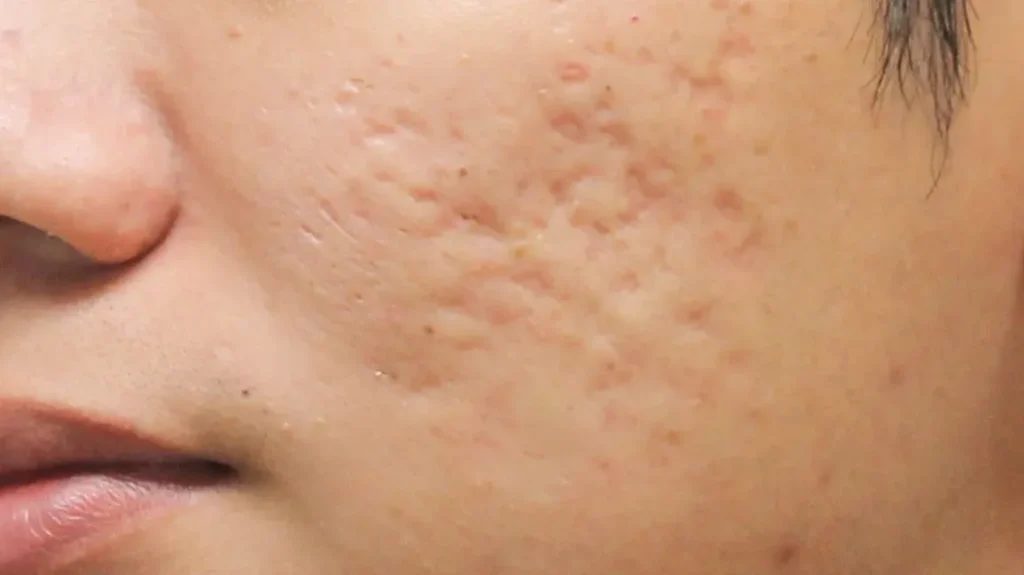
Battling active acne breakouts is frustrating enough, but dealing with the permanent textural scarring left in their wake can feel deeply discouraging. Post-acne scars aren’t just surface discoloration; they are structural changes in the deep dermal matrix caused by intense inflammatory damage. When an acne cyst or severe pustule ruptures deep inside a pore, it destroys localized collagen fibers and surrounding support tissue.
As the immune system rushes in to repair the wound, it often deposits replacement collagen unevenly. Depending on whether the body produces too little tissue or forms rigid fibrotic bands, different types of indented, atrophic scars form across the face. Understanding the physiological differences between rolling and boxcar scars is the critical first step in choosing the right corrective treatment.
Deconstructing Rolling Scars: The Invisible Tethering Effect
Rolling scars get their name from the wave-like, undulating appearance they create across the cheeks and temples. Unlike sharp, clearly defined scars, rolling scars make the skin surface look gently dimpled, uneven, or shadowed, especially under harsh overhead lighting.
The defining characteristic of rolling scars lies beneath the surface as fibrous anchoring bands. During the chaotic healing of an inflammatory acne lesion, tough bands of fibrotic scar tissue form between the upper dermis and the underlying subcutaneous fascia. These microscopic tethering bands contract over time, physically pulling the skin surface downward. To effectively smooth a rolling scar, treatment must focus on breaking these deep fibrous tethers while rebuilding cushiony structural collagen beneath the depression.
Understanding Boxcar Scars: Sharp Edges and Tissue Loss
Unlike rolling scars, boxcar scars appear as sharp, well-defined depressions with crisp vertical edges, resembling chickenpox scars or small crater-like indents. They occur when an acute inflammatory lesion destroys a localized volume of dermal tissue, leaving a void where normal collagen scaffold once existed.
Boxcar scars are categorized by their depth: shallow boxcar scars extend less than 0.5 millimeters into the skin, whereas deep boxcar scars reach deeper dermal layers. Because boxcar scars have distinct vertical walls, superficial creams and light surface scrubs can’t smooth them out. Eliminating boxcar scars requires targeted clinical interventions that resurface the sharp upper edges while strongly stimulating vertical collagen regrowth from the bottom of the crater upward.
Modern Dermal Resurfacing Technologies for Scar Remodeling
Treating complex structural scarring requires advanced aesthetic technologies that can reorganize disorganized scar tissue. Seeking specialized acne scar treatments in Vancouver gives you access to state-of-the-art fractional laser resurfacing and advanced collagen-induction modalities.
Fractional laser technology sends thousands of microscopic laser columns into the target area, creating controlled thermal micro-zones without damaging surrounding healthy tissue. This precise heating breaks down rigid, misshapen scar collagen and stimulates fibroblasts to synthesize fresh, smooth collagen fibers. For tethered rolling scars, practitioners often combine fractional resurfacing with subcision—a technique that uses a micro-cannula to gently release underlying fibrotic bands, allowing the skin surface to bounce back immediately.
The Power of Combination Therapies for Complex Skin Profiles
Rarely does a face present with only one single scar type; most individuals battling acne scars host a combination of rolling, boxcar, and ice-pick indentations alongside post-inflammatory redness. Achieving smooth skin requires a carefully customized, multi-modality treatment strategy.
An expert aesthetician may combine fractional laser resurfacing sessions with microneedling, gentle chemical cross-treatments, or targeted dermal fillers to lift deep depressions. By layering modalities that address both surface edge sharpness and deeper tethering, scar depth can be dramatically reduced over a series of appointments, restoring a smooth, light-reflecting surface.
Take the First Step Toward Smooth, Restored Skin Confidence
You do not have to accept persistent acne scars as a permanent fixture on your face. Modern clinical aesthetic science offers safe, highly effective solutions that actively rebuild damaged tissue and smooth out deep textural irregularities.
Reclaim smoother skin and boost your confidence by consulting a licensed skin resurfacing specialist. Book a personalized scar evaluation today to discuss a customized treatment plan tailored specifically to your unique dermal matrix, and watch your skin transform.
Collection Notes
The most useful choice should still feel like you.
01Keep the context
Judge every recommendation against your routine, priorities and real-world use.
02Edit the excess
Ignore noise that adds cost or complexity without adding meaningful value.
03Complete the look
Choose the option that works as part of the whole, not only in isolation.
FINAL FITTING
Glowvica Verdict
Considered, wearable and worth keeping.
The strongest decision is not always the loudest trend. It is the one that feels relevant now and remains useful after the season changes.
GAPPROVED EDIT
Glowvica Editorial Contributor
Admin
Beauty and fashion analysis focused on informed comparison, practical context and personal style.
FILE 188
Complete the Look
Continue along the rail.
Three portrait editorials selected from the same collection.


 LOOK 01
 LOOK 02
 LOOK 03